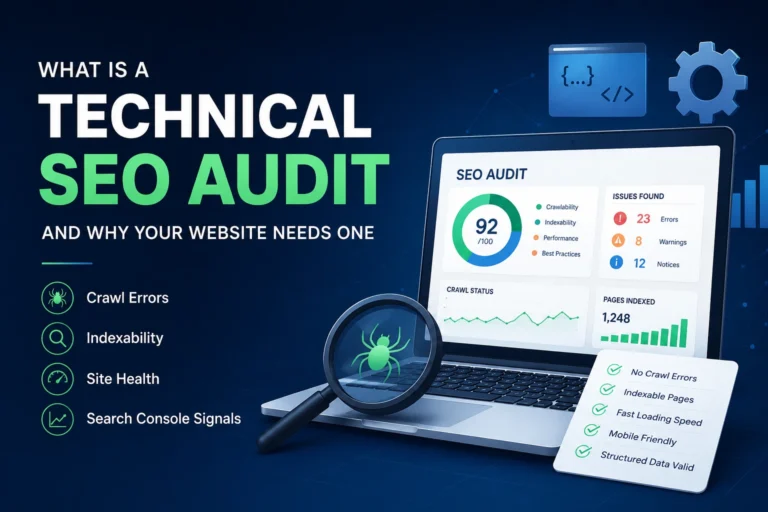
What is a Technical SEO Audit and Why Your Website Needs One
A technical SEO audit is a full check-up of your website’s backend health — how easily search engines can crawl it, index it, and understand what’s on each page. If Google can’t crawl your site properly or gets confused by broken links, slow load times, or duplicate content, none of your keyword research or content work matters much. Rankings sit on top of a technical foundation, and this audit is how you find out if that foundation is actually solid.
Why "Good Content" Isn't Enough Without This
A lot of site owners assume that publishing well-written pages is the whole job. Then they check Google Search Console a few months later and find half their pages aren’t even indexed. That’s almost always a technical issue — not a content one. Crawl errors, broken redirects, orphaned pages, or a messy sitemap can quietly keep your best content invisible to search engines.
What a Technical SEO Audit Actually Covers
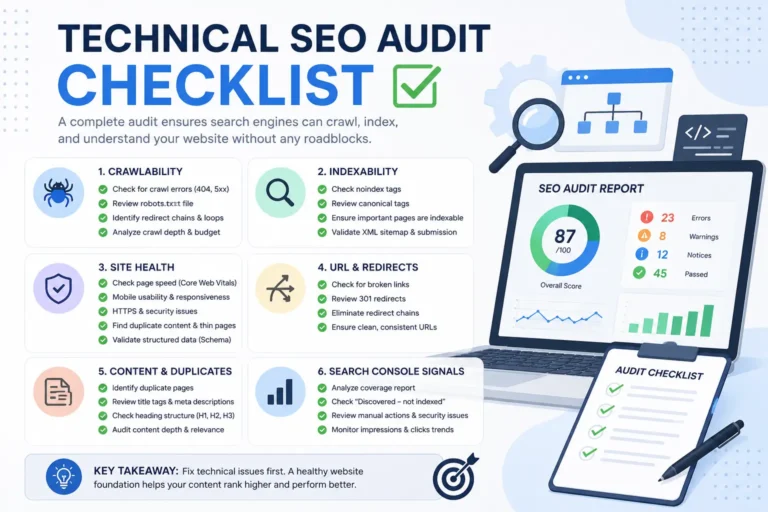
A proper website SEO audit isn’t a single checkbox — it’s a set of interconnected checks:
Crawl Errors and Crawlability
Search engine bots follow links to discover your pages. If they hit dead ends — 404s, redirect loops, or blocked resources in robots.txt — they stop crawling deeper into your site. An audit maps out every crawl error and traces it back to the root cause, not just the symptom.
Indexability Issues
A page can exist, load fine for a human visitor, and still never show up in search results. That usually comes down to indexability problems: accidental “noindex” tags, canonical tag conflicts, or thin/duplicate content that Google decides isn’t worth indexing separately.
Site Health Signals
This covers page speed, mobile usability, broken internal links, HTTPS/security setup, and structured data errors. Each of these affects both how search engines evaluate your site and how real visitors experience it — the two are more connected than most people assume.
Google Search Console Data Review
Search Console is the most direct feedback loop you have from Google itself. An audit digs into coverage reports, manual actions, mobile usability warnings, and Core Web Vitals data to spot patterns that aren’t obvious from just browsing the site yourself.
Common Technical Issues Found During Audits
Some issues show up again and again across websites of every size:
- Duplicate content from URL parameters or session IDs
- Missing or conflicting canonical tags
- Slow server response times dragging down Core Web Vitals
- Broken internal links pointing to deleted or moved pages
- XML sitemaps that list pages already removed from the site
- Redirect chains (page A → B → C) instead of direct redirects
None of these are necessarily visible when you just look at the site as a visitor. That’s exactly why a dedicated audit process exists — someone has to go under the hood.
How Often Should You Run One?
There’s no single fixed number, but a full audit after any major site change (redesign, migration, CMS switch) is non-negotiable. Outside of that, a periodic review helps catch issues before they compound — small crawl errors left unaddressed tend to multiply as a site grows.
Getting Started
If you’ve never had a technical audit done, or it’s been a while, the fastest way to know where you stand is to have one run against your actual site data rather than guessing from surface-level checks. You can check out our Technical SEO Audit Services for a full breakdown of what’s included, or call us directly at 9718159724 to talk through what your site might need before committing to anything.

Frequently Asked Questions
What exactly is included in a technical SEO audit?
It covers crawlability, indexability, site speed, mobile usability, structured data, internal linking, and a review of Google Search Console data — essentially everything that affects how search engines access and evaluate your site.
How is a technical SEO audit different from a content audit?
A content audit looks at what’s written on your pages — quality, relevance, keyword coverage. A technical audit looks at whether search engines can even reach and understand those pages in the first place.
Can crawl errors actually hurt my rankings?
Yes. If bots repeatedly hit errors while crawling your site, they may crawl less frequently or skip sections entirely, which directly limits how much of your content gets indexed and ranked.
. What does "indexability" mean in simple terms?
It’s whether a page is eligible to appear in search results at all. A page can load perfectly for visitors and still be excluded from search results due to indexability issues like noindex tags or canonical conflicts.
Do I need a technical audit if my site looks fine to visitors?
Yes — most technical issues aren’t visible from a normal browsing experience. They show up in crawl data, server logs, and Search Console reports, not on the page itself.
How does Google Search Console help with a technical audit?
It’s a direct data source from Google showing coverage issues, manual actions, mobile usability problems, and performance metrics — information you can’t get just by browsing your own site.
What counts as a "crawl error"?
Common examples include 404 pages, server errors (5xx), blocked resources in robots.txt, and redirect loops that prevent bots from reaching a page successfully.
Will fixing technical SEO issues improve my rankings immediately?
Not immediately — search engines need to recrawl and reprocess your site after fixes. But resolving indexability and crawl issues removes barriers that were actively holding pages back.
How long does a technical SEO audit usually take?
It depends on site size and complexity — a small site can be audited faster than a large e-commerce catalog with thousands of URLs, since each page and template needs to be checked.
Do I need ongoing audits or is one enough?
One audit fixes what’s currently broken, but sites change constantly — new pages, redesigns, plugin updates. Periodic reviews catch new issues before they start affecting rankings again.